Marble Mountains
A cluster of limestone hills filled with caves, pagodas, and panoramic viewpoints just south of Da Nang.
Overview
The Marble Mountains are one of the most fascinating natural and cultural landmarks near Da Nang. Located about 8 kilometers south of the city center, this cluster of five limestone hills rises dramatically from the coastal plain between Da Nang and Hoi An.
Each mountain is named after one of the five elements in Eastern philosophy: Kim (Metal), Moc (Wood), Thuy (Water), Hoa (Fire), and Tho (Earth). Over centuries, the mountains have become home to ancient caves, Buddhist pagodas, stone stairways, and hidden sanctuaries carved into the rock.
Today, Marble Mountains is both a spiritual pilgrimage site and a popular attraction for travelers looking to explore caves, temples, and breathtaking viewpoints overlooking the coastline.
Highlights
Thuy Son (Water Mountain)
The most famous and accessible mountain is Thuy Son, the largest of the five peaks. Most visitors explore this mountain because it contains the majority of temples, caves, and viewpoints.
Stone staircases lead visitors through lush paths, ancient pagodas, and scenic overlooks.
Huyen Khong Cave
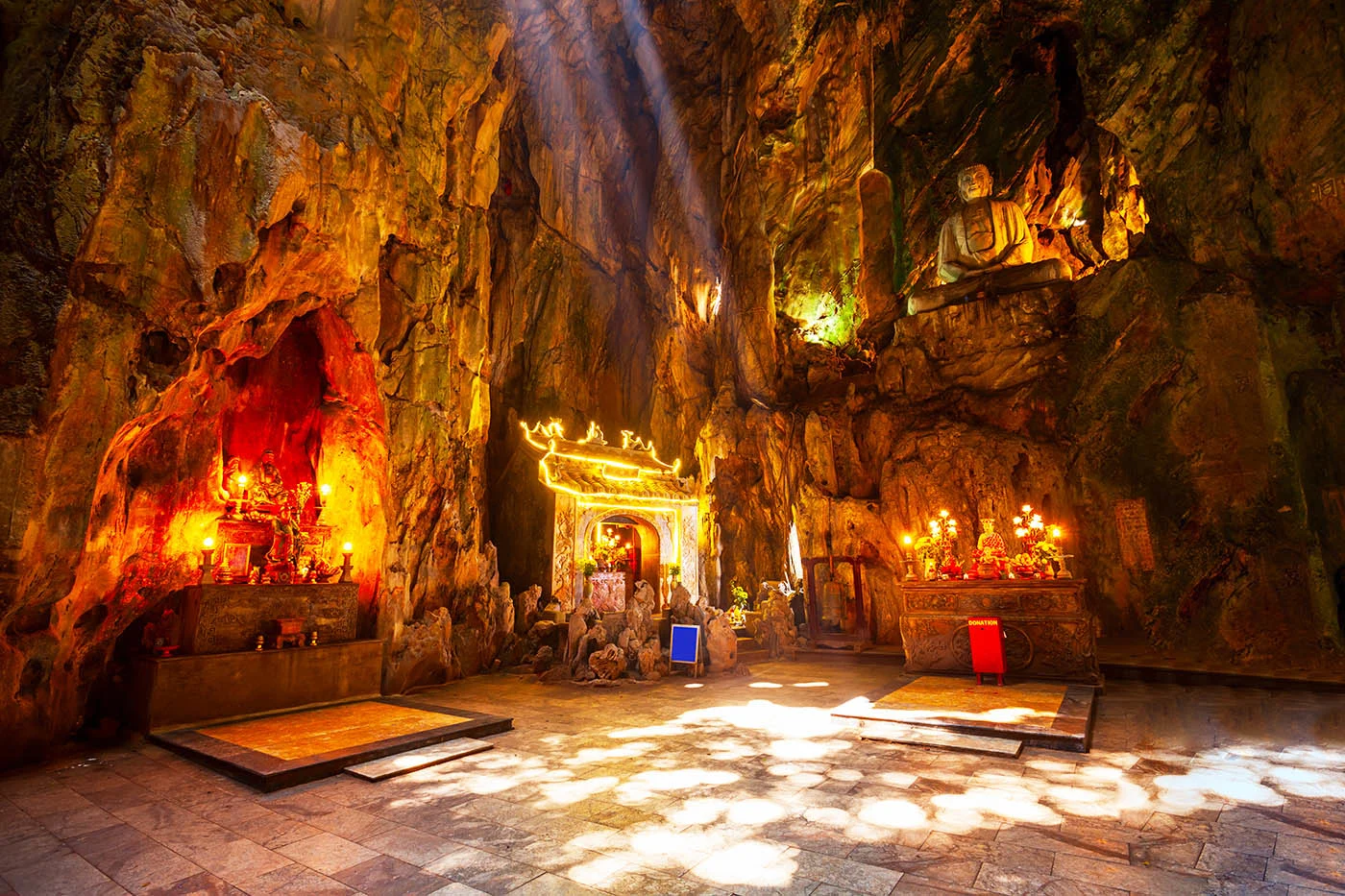
One of the most impressive caves in the complex, Huyen Khong Cave features a dramatic opening in the ceiling that allows sunlight to stream into the cavern.
Inside the cave, visitors will find Buddhist altars, statues, and incense offerings, creating a mystical atmosphere that blends natural beauty with spiritual tradition.
Linh Ung Pagoda (Marble Mountains)
Another highlight is Linh Ung Pagoda, a historic temple located within the Marble Mountains. Unlike the famous pagoda on the Son Tra Peninsula, this temple is smaller and more traditional, surrounded by forest and stone cliffs.
Summit Viewpoints
At the top of Thuy Son, visitors can enjoy spectacular views of the coastline, nearby villages, and the distant mountains of central Vietnam.
These viewpoints are among the best spots for panoramic photography near Da Nang.
History
The Marble Mountains have long been considered sacred by local communities. For centuries, Buddhist monks built temples and shrines inside the mountains’ caves and on their slopes.
During the Vietnam War, some of the caves were used as shelters and field hospitals. Evidence of this history can still be found inside certain caves today.
The mountains are also historically linked to stone carving traditions, and the nearby Non Nuoc village remains famous for its marble sculpture workshops.
What to See
When visiting Marble Mountains, these attractions are worth exploring:
- Thuy Son Mountain – The main mountain with temples and viewpoints
- Huyen Khong Cave – A dramatic cave illuminated by natural sunlight
- Tam Thai Pagoda – One of the oldest temples in the area
- Linh Ung Pagoda (Marble Mountains) – A peaceful mountain temple
- Am Phu Cave – A cave depicting Buddhist concepts of heaven and hell
- Non Nuoc Stone Carving Village – A traditional craft village at the base of the mountains
Best Time to Visit
The best time to explore Marble Mountains is early morning or late afternoon.
These times offer:
- Cooler temperatures for climbing stairs
- Softer light for photography
- Fewer tour groups
Midday can become hot and crowded, especially during peak tourist seasons.
Visitor Tips
- Wear comfortable shoes since the site involves climbing stairs and walking on uneven surfaces.
- Bring water, especially if visiting during hot weather.
- There is an elevator option that can take visitors near the top of Thuy Son if you want to avoid climbing many stairs.
- Allow 1.5 to 2 hours to explore the main areas.
- Combine the visit with nearby attractions like My Khe Beach or Hoi An.
Frequently Asked Questions
How much is the entrance fee for Marble Mountains?
The entrance fee is approximately 40,000 VND per person. An additional fee applies if you choose to use the elevator.
How long does it take to visit Marble Mountains?
Most visitors spend 1 to 2 hours exploring the caves, temples, and viewpoints.
Are the Marble Mountains difficult to climb?
Some stairways are steep, but they are manageable for most visitors. An elevator is available for easier access.
Can you visit Marble Mountains without a tour?
Yes. Many travelers visit independently by motorbike, taxi, or ride-hailing services.
Nearby Attractions
Several major attractions are located close to Marble Mountains:
- My Khe Beach – One of the most beautiful beaches in Da Nang
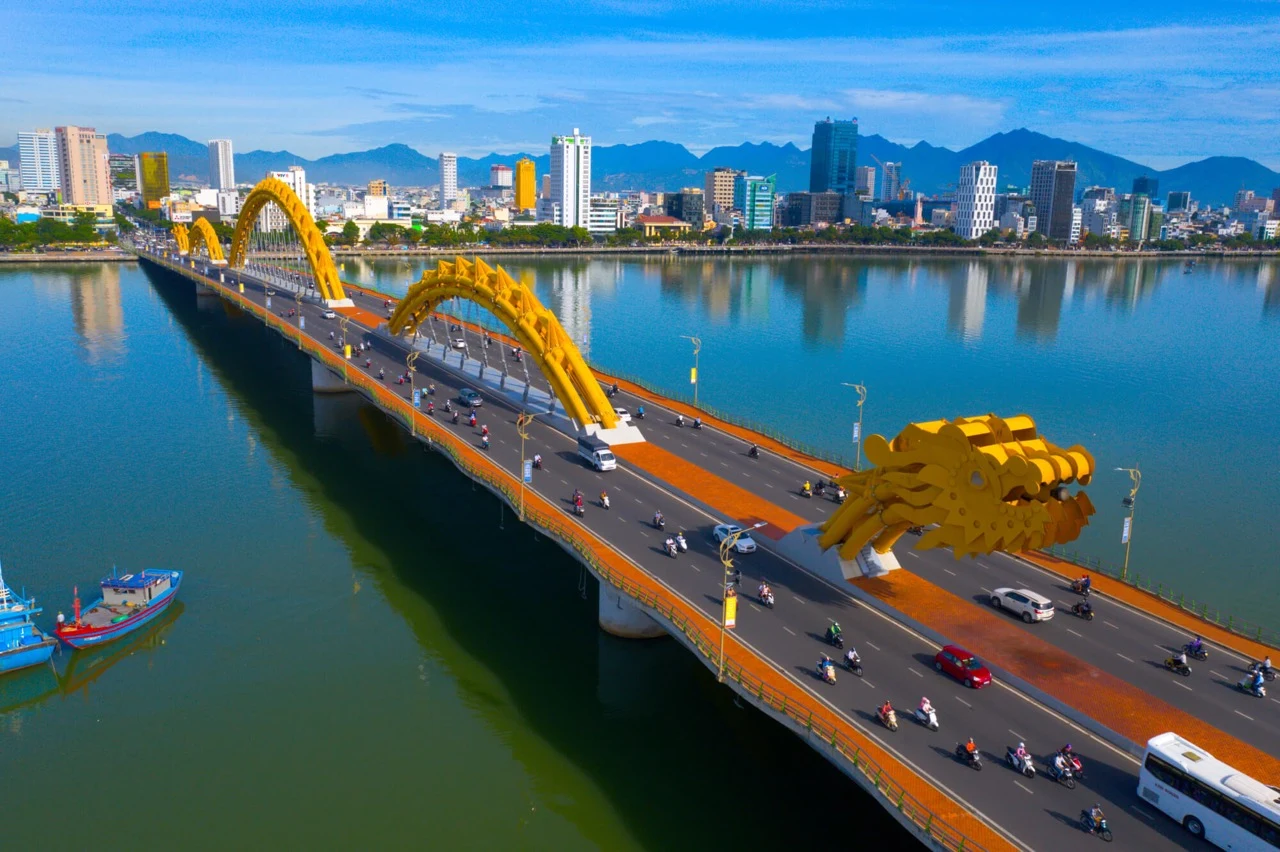
- Dragon Bridge – A famous city landmark that breathes fire on weekend nights
- Linh Ung Pagoda (Son Tra Peninsula) – Home to the towering Lady Buddha statue
- Hoi An Ancient Town – A UNESCO World Heritage town known for lantern-lit streets and historic architecture
These sites make Marble Mountains an easy stop when traveling between Da Nang and Hoi An.
Photography Tips
Marble Mountains offers unique photography opportunities thanks to its mix of caves, temples, and natural landscapes.
Cave light rays
In Huyen Khong Cave, sunlight streams through openings in the rock, creating dramatic light beams perfect for photography.
Mountain viewpoints
Climb to the summit viewpoints to capture panoramic views of the coastline and surrounding countryside.
Temple architecture
Pagodas and stone statues provide excellent subjects for cultural and architectural photography.
Early morning atmosphere
Morning visits offer misty scenery and softer light across the limestone mountains.
Suggested Itinerary
Marble Mountains is easy to include in a half-day exploration of southern Da Nang.
Morning
- Start at Marble Mountains early to avoid heat and crowds
- Explore caves, temples, and viewpoints
Late morning
- Visit Non Nuoc Stone Carving Village nearby
Afternoon
- Relax at My Khe Beach or drive toward Hoi An Ancient Town
This route offers a perfect combination of nature, culture, and coastal scenery in a single day.
Insider Secrets
Local Etiquette
Find your way
Open in Google MapsKeep Exploring